If you’re exploring Sage ERP pricing, you’re likely weighing features, deployment options, and long-term costs. This guide breaks down the pricing models, cost drivers, and total cost of ownership (TCO) so you can budget accurately, avoid surprises, and negotiate confidently.
Factors That Affect Sage ERP Pricing
Company size and user count
More users, locations, and transactions typically mean higher subscription or license costs and larger implementation scope.
Customization level
Out-of-the-box features cost less. Custom workflows, reports, add-ons, or integrations (e.g., CRM, eCommerce, 3PL) increase project hours and price.
Modules selected
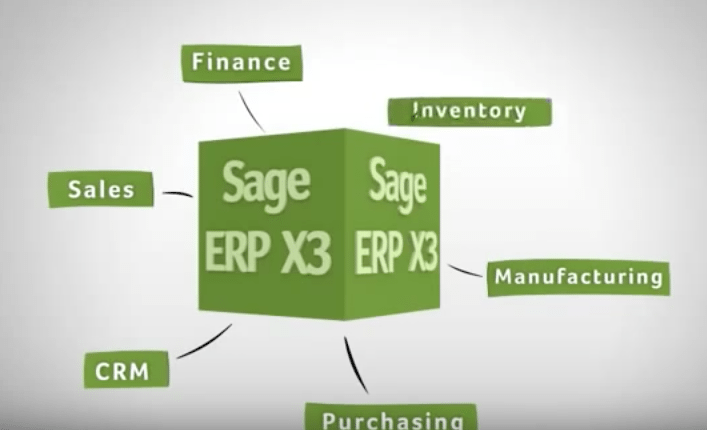
Pay only for what you deploy. Common add-ons—manufacturing, distribution, project accounting, advanced inventory, multi-entity—add to subscription and setup.
Deployment method
Cloud (subscription) reduces upfront spend and IT overhead but adds ongoing fees. On-premise (perpetual license) has higher upfront costs plus annual maintenance and infrastructure.
Implementation, training, and support
Discovery, configuration, data migration, testing, go-live, and user training often equal or exceed year-one software spend. Post-go-live support (basic or premium SLAs) also affects budget.
Sage ERP Pricing Models
Subscription (SaaS)
Monthly or annual fees by user and module. Pros: lower upfront cost, automatic updates, predictable cash flow. Consider term length, renewal escalators, and overage charges.
Perpetual license (on-prem)
One-time license plus annual maintenance (typically a percentage of license value). Pros: capitalizable asset and control. Factor in servers, backups, security, and upgrade projects.
Modular (à la carte)
Start with finance core, add manufacturing, inventory, or multi-entity later. Aligns spend with phase-by-phase rollout.
Custom solution pricing
For complex requirements, scoped statements of work (SOWs) define fixed-fee or time-and-materials estimates for development and integrations.
Understanding Sage ERP Cost Components
1) Software
Base financials + selected modules + user licenses (named or concurrent, depending on product).
2) Implementation services
Process design, configuration, data cleansing and migration, integrations, testing (unit/UAT), cutover, and hypercare.
3) Training and change management
Role-based training, SOPs, quick-reference guides, and admin enablement reduce post-go-live friction.
4) Support and maintenance
Vendor or partner support tiers, patching, and periodic upgrades. Cloud includes platform upkeep; on-prem adds infrastructure costs.
5) Optional add-ons
Advanced reporting/BI, EDI, WMS, tax automation, payments, CPQ, or PLM.
Calculating Total Cost of Ownership (TCO)
Use this simple framework to compare options apples-to-apples over 3–5 years.
Year-One TCO = Software (Year 1) + Implementation + Training + Initial Integrations + Data Migration + Internal Labor (project team time) + Hardware/Cloud setup (as applicable)
Ongoing Annual TCO = Software (renewal) + Support/Maintenance + Minor Enhancements + Admin Time + Infrastructure (for on-prem)
5-Year TCO = Year-One TCO + 4 × Ongoing Annual TCO
Tip: include a contingency of 10–15% for change requests uncovered during UAT or after go-live.
Budget Ranges to Plan Internally (Non-binding)
Because each scope is unique, think in ratios, not just sticker prices:
• Light finance deployment: Implementation often equals ~0.8–1.2× year-one software
• Finance + inventory + light manufacturing: ~1.0–1.8× year-one software
• Multi-entity, complex integrations, regulated industries: ~1.5–3.0× year-one software
These ratios help you sanity-check quotes without relying on list prices.
Tips to Reduce Sage ERP Cost and Risk
Prioritize must-haves
Lock scope on compliance, close, and order-to-cash. Park “nice-to-haves” for Phase 2.
Clean data before the project
Deduplicate vendors/items/customers and standardize units of measure to cut migration hours.
Adopt standard processes
Configure > customize. Leverage native workflows and reports where possible.
Bundle services
Negotiate implementation + training + year-one support as a package for better value.
Negotiate renewal terms
Cap annual price escalators, secure multi-year discounts, and clarify user add/remove policies.
Pilot and prove
Run a conference-room pilot with real transactions. Catch gaps early, not during cutover.
Negotiation Checklist (Copy-paste for your RFP)
• Itemized pricing: users by role, modules, environments (prod/sandbox), and storage
• Implementation SOW with milestones, deliverables, assumptions, and change-order terms
• Integration scope (systems, methods, responsibilities)
• Data migration counts (customers, vendors, items, open balances, historic transactions)
• Training plan (roles, hours, materials, admin handoff)
• Support SLAs, escalation paths, and named contacts
• Renewal caps, term length, and incentives for multi-year prepay
• Exit/migration assistance if you change editions or vendors
Example TCO Scenario (Illustrative)
A 25-user finance + inventory deployment with one CRM integration:
• Year-One Software: baseline + inventory + 25 users
• Services: configuration, migration of masters and 24 months history, CRM integration, UAT, go-live, hypercare
• Training: role-based sessions and admin bootcamp
• Ongoing Annual: subscription renewal, support, minor enhancements
Use the 1.0–1.5× ratio to estimate services vs software and validate partner quotes.
When a Higher Price Is Worth It
• You need robust multi-entity consolidations or complex manufacturing (BOMs, routings, finite scheduling)
• Strict compliance (revenue recognition, audit controls, FDA/ISO) demands deeper functionality
• You want faster close, granular margin visibility, and real-time dashboards for decision-making
Conclusion
Sage ERP pricing varies by users, modules, deployment, and implementation scope. Build your business case using a TCO lens, phase deployments to control risk, and negotiate renewals upfront. By prioritizing must-have processes, cleaning data early, and bundling services, you’ll lower cost, accelerate time-to-value, and set up a scalable platform that supports growth.